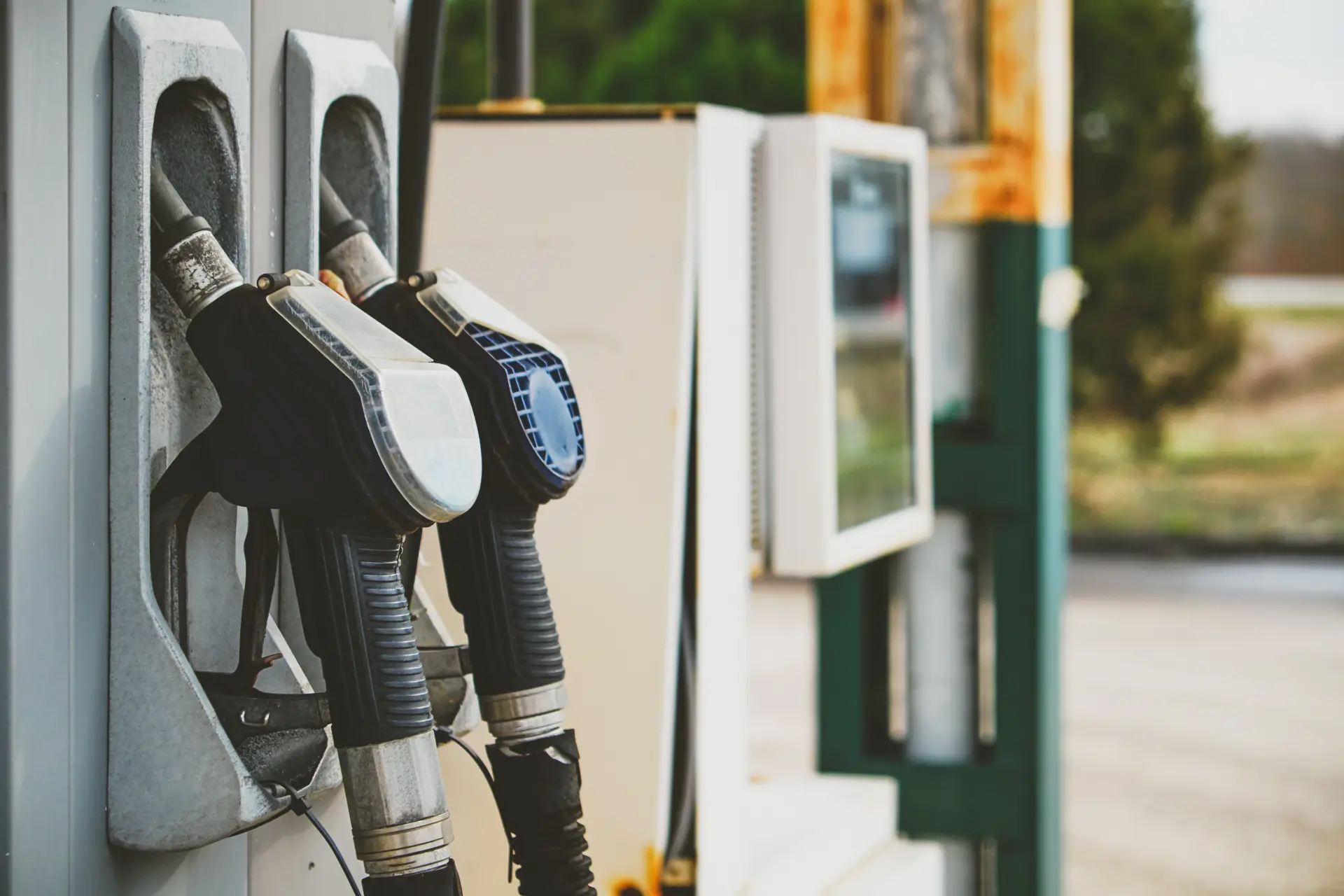
Most neighborhood convenience stores run 3–4 MPDs (multi-product dispensers), higher-volume sites scale up to 6–8 MPDs, and travel centers or truck stops need considerably more once you add dedicated diesel lanes for commercial trucks. There’s no universal formula — the right count depends on your site’s land size, projected traffic volume, and how much room you have for vehicles to queue without blocking circulation. Here’s how to think through it.
MPD Count by Site Type
| SITE TYPE | TYPICAL MPD COUNT | FUELING POSITIONS* |
| Neighborhood / small-format c-store | 3–4 MPDs | 6-8 |
| Mid-size, higher-traffic site | 4–6 MPDs | 8-12 |
| High-volume / highway-adjacent site | 6–8 MPDs | 12-16 |
| Travel center / truck stop | 8+ gasoline MPDs, plus separate diesel lanes | Varies widely by lane count |
*Each MPD is a “multi-product dispenser” — a single island unit that typically fuels two vehicles at once, one from each side, which is why fueling position count runs roughly double the MPD count.
What Drives the Right Number for Your Site
Projected traffic and fill-up volume matter more than a rule of thumb. A site pulling steady commuter traffic off a busy arterial road can justify more dispensers than a similarly sized lot on a quieter secondary road, even if both have the same square footage available. This is the core variable a feasibility study is built to estimate before you commit to a dispenser count.
Land size sets the ceiling. More MPDs means a larger canopy, wider drive aisles, and more room for vehicles to queue (“stacking”) without backing into the street or blocking the convenience store entrance. As a rough guide, a small-format site with 3–4 MPDs generally needs a minimum of roughly half an acre to an acre, while a larger site with 6–8 MPDs and a car wash typically needs 1.5 acres or more — exact requirements vary by local zoning, stacking depth needed, and site shape.
Canopy size follows dispenser count. A standard 4-dispenser canopy runs roughly 40 by 60 feet, with clearance of at least 13.5 feet (often 15–18 feet to comfortably clear taller trucks and SUVs). Adding dispensers extends the canopy footprint proportionally — and the canopy is one of the more expensive single components of a fuel site build.
Stacking room prevents your own bottleneck. If there isn’t enough room for a second vehicle to wait behind an occupied pump without blocking the drive aisle or the street, you effectively cap your own throughput regardless of how many MPDs you install. This is one of the most common site-design mistakes in fuel retail — more pumps without enough queuing room doesn’t add capacity, it just adds cost.
Why More Pumps Isn’t Always Better
It’s tempting to treat MPD count as a “bigger is better” decision, but oversizing a site’s fuel capacity ties up capital in equipment and canopy that the site’s actual traffic can’t fully utilize — while undersizing leaves real revenue on the table during peak hours. The right number is the one that matches your site’s realistic transaction volume, not the maximum the lot could physically fit.
The Real Question a Feasibility Study Answers
Dispenser count, canopy size, and land requirements are really downstream decisions — the number that actually matters is how much traffic your specific site can realistically convert into fuel transactions. A site feasibility study models that traffic and demand directly against your site, so the MPD count you build to is grounded in your actual market rather than an industry-average guess.
Get a Free Site Feasibility Consultation
Got Questions?
Frequently Asked Questions
About How Many Fuel Pumps (MPDs) Your Site Needs
How many fuel pumps does a small gas station typically have?
Most small-format convenience stores run 3–4 MPDs (multi-product dispensers), which typically provide 6–8 fueling positions since each MPD generally serves two vehicles at once.
How much land do I need for a 4-MPD gas station?
As a rough guide, a small-format site with 3–4 MPDs generally needs a minimum of roughly half an acre to an acre, though exact requirements depend on local zoning, stacking depth, and site shape.
What size canopy do I need for 4 fuel dispensers?
A standard 4-dispenser canopy is typically around 40 by 60 feet, with a minimum clearance of 13.5 feet — often built to 15–18 feet to comfortably accommodate taller trucks and SUVs.
Why would a site need more MPDs than the traffic seems to justify?
It usually shouldn’t — oversizing dispenser count relative to actual traffic ties up capital without adding meaningful revenue. MPD count should be sized to projected transaction volume, not the maximum the lot can physically fit.
How is MPD count different from “fueling positions”?
An MPD (multi-product dispenser) is the physical island unit; most MPDs fuel two vehicles simultaneously, one on each side. So a 4-MPD site typically offers 6–8 fueling positions, not 4.